Read Our Bible
Based on manuscripts centuries older than those used by other translations.
There are some interesting differences.
- Genesis
- Exodus
- Leviticus
- Numbers
- Deuteronomy
- Joshua
- Judges
- Ruth
- 1 Samuel
- 2 Samuel
- 1 Kings
- 2 Kings
- 1 Chronicles
- 2 Chronicles
- Ezra (Alpha)
- Ezra (Beta)
- Nehemiah
- Esther
- Job
- Psalms
- Proverbs
- Ecclesiastes
- Song of Solomon
- Isaiah
- Jeremiah
- Lamentations
- Ezekiel
- Daniel (Old Greek)
- Daniel (Theodotion)
- Hosea
- Joel
- Amos
- Obadiah
- Jonah
- Micah
- Nahum
- Habakkuk
- Zephaniah
- Haggai
- Zechariah
- Malachi
- Matthew
- Mark
- Luke
- John
- Acts
- Romans
- 1 Corinthians
- 2 Corinthians
- Galatians
- Ephesians
- Philippians
- Colossians
- 1 Thessalonians
- 2 Thessalonians
- 1 Timothy
- 2 Timothy
- Titus
- Philemon
- Hebrews
- James
- 1 Peter
- 2 Peter
- 1 John
- 2 John
- 3 John
- Jude
- Revelation
- All Texts
- Interlinears

Closer to What Early Christians Used
Our Old Testament is based on manuscripts 600 years older than the ones used by other Bible translations! And the differences are illuminating.
The early Christians preferred the readings in the Greek Septuagint over the Hebrew text, sometimes even arguing that it was more accurate. You see, they accused the Pharisees of tampering with the Hebrew text, especially the prophecies about Jesus.
Prophecies of Jesus — Restored!
Did you know that some prophecies about Jesus only appear the Greek Seputagint text, not the Hebrew Masoretic Text that’s come down to us today? It’s true! Since our Bible uses the same version of the text that the New Testament writers used (or a very similar one), you can read something identical to or, at least, closer to what the early Christians knew.
Older Version of Daniel
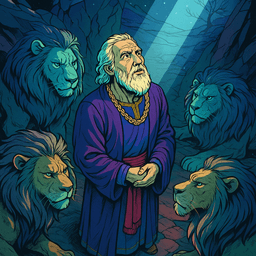
We provide a modern translation of the Old Greek version of Daniel, an older version of the text used by the early Christians.
Corrected Chronology

Ever wondered why archaeological dates don’t match traditional Bible timelines? Here’s why: most Bibles use corrupted texts! Our translation restores the original timeline from the Greek Septuagint.
The result? Adam was created about 7,500 years ago (not 6,000), and the Great Flood occurred around 5,400 years ago. These dates align better with archaeological evidence and ancient historical records.
Modern, Clear Formatting

Most Bible translations are just ‘walls of text’ — intimidating and hard to read. We’ve formatted our Bible with modern readers in mind:
- Lots of paragraph breaks and indentation
- Bulleted lists where appropriate
- Modern punctuation and quotation marks
- Bold and italic text for emphasis
These features help you to read more, more quickly, with more comprehension!
God’s Name
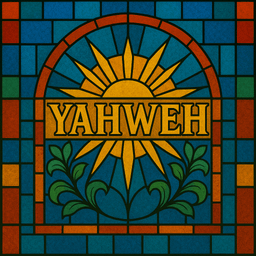
Greek manuscripts use circumlocutions to avoid saying God’s Name.
These are substitute words, designed to avoid saying something aloud that might be considered disrespectful.
Special ones were used for centuries to replace God’s Name as a mark of respect. They appear thousands of times in the Greek Bible. They also appear in the New Testament, yes, Jesus and the Apostles used them too (everyone did).
So, we [insert] God’s Name where these circumlocutions appear in our Greek source texts. Yes, God’s Name appears as a circumlocution in the New Testament!
Alternatively, you can choose to see the name spelled as Yahweh or Jehovah by changing your settings. Or, if you prefer, you can see the original circumlocutions as “Lord”.
Spurious Texts Grayed-Out

Most Bible translations are sponsored by churches who pressure translators to keep certain verses – even ones they know are not genuine!
We’re different. Instead of hiding these issues in footnotes, we clearly mark spurious passages by graying them out right in the text. From the famous ‘Let he who is without sin cast the first stone’ to the Trinity ‘proof text’ ‘these three are one’, you’ll know exactly which parts were added later!
Don’t worry – these additions are few and most just repeat what’s said elsewhere. We gray them out (instead of removing them) to preserve verse numbering and because we might be wrong!
Extensive Notes

Why did we translate something like that? Each green-highlighted word links to a note explaining translation challenges, and why we made controversial decisions.
What’s New?
September 2025
New Features
- New layout and artwork
- Interlinears
- Concordance
Bible Books
Also:
Non-Bible Books
- 1 Enoch
- 1 Maccabees
- Psalm 151
- The Didache
- To the Newly Baptized by Clement of Alexandria
- The Letter of Aristeas
New Pages
- Dozens of new pages on the Articles page
- A donation page
Proofreading
Commentaries
We also host a separate website of scriptural commentaries.
Here are some long-time favorites: